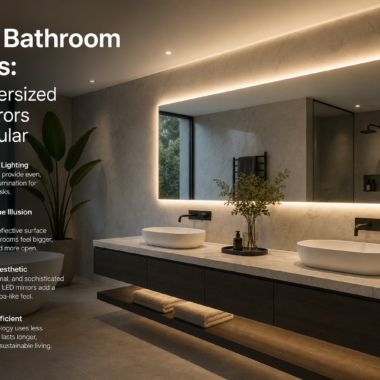

LED mirrors spent their first decade confined to bathrooms. Functional lighting above a sink, nothing more. That has changed. The same technology that makes a bathroom mirror useful — shadow-free illumination, adjustable brightness, clean lines — works just as well in a bedroom, a dressing room, or an entryway.
The difference is purpose. A bathroom mirror lights your face for grooming. A bedroom mirror lights your outfit for dressing. An entryway mirror gives you a final check before you leave the house. The lighting needs are similar, but the context changes everything — size, placement, features, and how the mirror integrates into the room.
This guide walks through LED mirror applications beyond the bathroom, with specific recommendations for Indian homes where space is often tight and multi-functionality is essential.
Why LED Mirrors Work Outside the Bathroom
Traditional mirrors reflect available light. If your bedroom has a single ceiling fixture, the reflection shows you standing in your own shadow. If your dressing room relies on a table lamp, one side of your outfit is lit and the other is dark. If your entryway has no light at all, the mirror is decorative but not functional.
An LED mirror solves this by producing its own light. The illumination is even, shadowless, and bright enough to see color accurately. You do not need to add sconces, table lamps, or overhead fixtures — the mirror handles both tasks.
This simplifies the room’s electrical layout and reduces visual clutter. One fixture instead of three. One switch instead of multiple controls scattered around the room.
LED Mirrors in the Bedroom
Primary Use Case: Dressing and Outfit Checks
A bedroom LED mirror is a full-length or near-full-length mirror that shows your outfit from head to toe. The built-in lighting lets you see fabric colors accurately, check for wrinkles, and confirm that patterns are not clashing — all without relying on a ceiling light that casts shadows from above.
Recommended Size and Placement
A full-length bedroom mirror should be at least 48 inches (4 feet) tall to show your full body when standing 3-4 feet away. If you want to see your head and shoes in the same glance without stepping back, go with 60 inches (5 feet) or taller.
Width depends on how much of your body you want to see at once. A 20-inch wide mirror shows your torso and face. A 30-inch wide mirror shows your full body plus a bit of space on either side, which gives you better context for how the outfit looks.
Mount the mirror so that its center sits at 5 feet from the floor. This positions the mirror at eye level for most adults and ensures the bottom edge is low enough to see your shoes.
Freestanding vs. Wall-Mounted
Wall-mounted LED mirrors save floor space, which is valuable in compact Indian bedrooms (10′ × 10′ or smaller). They also feel more permanent and integrated into the room’s design.
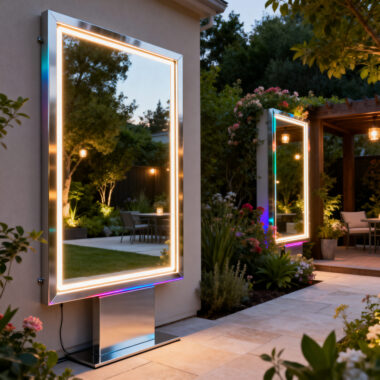
Freestanding LED mirrors with a floor stand offer flexibility — you can move them, tilt them, or reposition them when you rearrange furniture. They work well in rental apartments where wall mounting is not an option.
Both styles are available with LED lighting. Choose wall-mounted if floor space is tight, freestanding if you want portability.
Recommended Products
Based on this article, you might also like: